
S.T.E.M
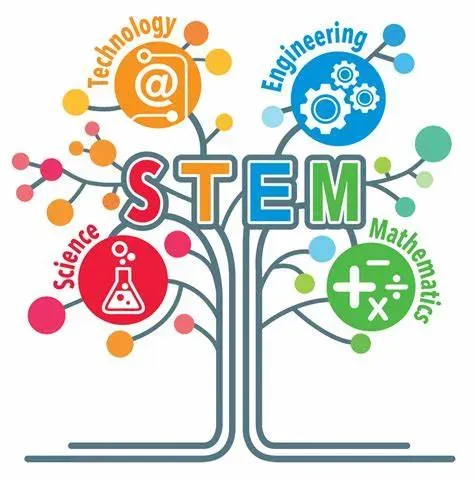
STEM Club
Our STEM Club offers students the opportunity to explore the exciting worlds of Science, Technology, Engineering and Mathematics beyond the classroom. Through hands-on investigations, creative design projects and real-world problem-solving challenges, students develop valuable skills in teamwork, innovation, resilience and critical thinking.
This year, members will take part in a range of exciting activities, including extracting DNA from kiwi fruit, designing and building scribble bots, investigating chemical reactions through microscale chemistry experiments, exploring the wonders of astronomy, and growing microbes to develop practical laboratory techniques.
STEM Club is designed to inspire curiosity, creativity and a love of discovery. Whether students are conducting experiments, building prototypes, analysing data or tackling engineering challenges, they are encouraged to think independently, ask questions and learn through exploration.
As well as being great fun, the club helps students build confidence, develop future-ready skills and gain a deeper understanding of the many careers and opportunities available within STEM industries. It is an excellent opportunity for young scientists, engineers and innovators to challenge themselves, broaden their horizons and turn their ideas into reality. 🚀🔬⚙️🧪🌟
Why Join STEM Club?
- 🔬 Take part in exciting practical experiments and investigations
- ⚙️ Design, build and test engineering projects
- 🌌 Explore topics beyond the classroom curriculum
- 🤝 Develop teamwork, creativity and problem-solving skills
- 🚀 Discover future careers in science, technology and engineering
- 🌟 Have fun while learning and making new friends
Curious minds welcome! Whether you already love STEM subjects or simply enjoy finding out how things work, STEM Club is the perfect place to explore, experiment and innovate.
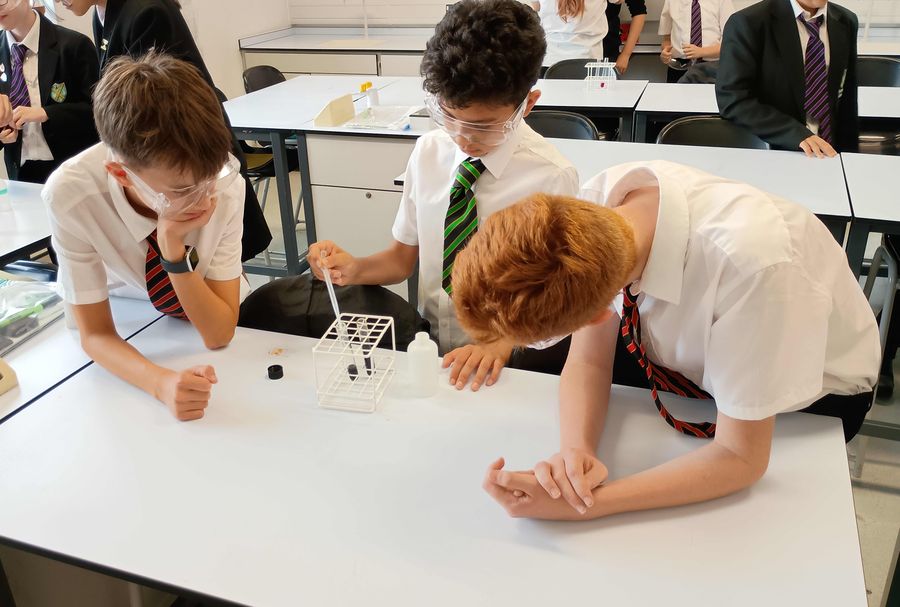
STEM Club This Year
Our STEM Club gives students exciting opportunities to explore science, technology, engineering and mathematics beyond the classroom. Throughout the year, students will take part in a varied programme of practical experiments, creative challenges and collaborative projects designed to build curiosity, confidence and problem-solving skills.
Autumn Term
Students will begin the year with a colourful and engaging range of chemistry, biology and physics activities, including:
- Creating a pH rainbow
- Exploring endothermic and exothermic reactions
- Investigating Skittle diffusion
- Designing solutions for the egg-drop challenge
- Taking part in the Bungee Barbie engineering challenge
- Growing and examining microbes
- Investigating evolution through fossils and bird beaks
- Making natural indicators from vegetables
- Using microscopes to examine different types of cells
- Extracting DNA from kiwi fruit
- Exploring pendulums and waves
- Creating bubble and crystal wands
- Making lime batteries
- Conducting colourful flame tests
There will also be opportunities to explore astronomy, biodiversity and visits linked to scientific learning.
Spring Term
During the spring, students will continue developing their scientific and engineering skills through activities such as:
- Investigating plant stomata
- Creating models of cells using sweets and jelly
- Building scribble bots
- Constructing tensegrity structures
- Exploring osmosis using gummy bears
- Experimenting with fire writing and invisible ink
- Completing extended STEM projects
- Taking part in activities during STEM Week
- Exploring scientific dissection
- Building graphite circuits
- Investigating fermentation and respiration
Summer Term
The summer programme will make the most of opportunities for environmental and outdoor learning. Planned activities include:
- Growing tomato plants and observing butterflies
- Designing and building a bug hotel
- Carrying out a flower dissection
- Investigating the chemistry of slime
- Using choice chambers to study animal behaviour
- Completing a science scavenger hunt
- Exploring static electricity
- Conducting microscale chemistry experiments
- Investigating buoyancy in fresh and salt water
- Testing the effectiveness of sunscreen
- Creating models of brains and neurones
- Designing a sustainable school on an island
- Creating light-up games
- Making galaxy jars and sodium alginate shapes
The programme may be adjusted during the year to respond to available resources, visiting speakers and exciting new opportunities. Every session will encourage students to investigate, create, collaborate and think like scientists and engineers.